
Introduction
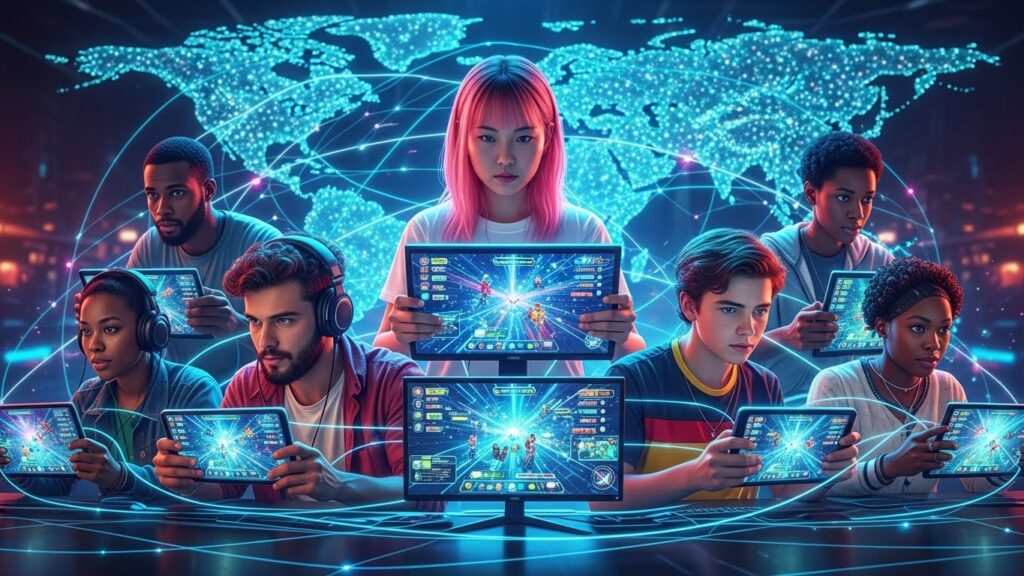
Online multiplayer games have completely changed the face of modern entertainment. In the past, video games were mostly played alone or with a few friends on the same device. Today, millions of players from different countries compete, cooperate, and communicate with each other in real time. From battle royale games to team-based shooters and strategy titles, online multiplayer gaming has created a global digital playground where borders no longer matter.
This article explores how online multiplayer gaming developed, why it is so popular, its advantages and disadvantages, its role in esports, and what the future holds.
1. What Are Online Multiplayer Games?
Online multiplayer games are video games that allow multiple players to connect and play together via the internet. These players can:
- Compete against each other
- Play in teams
- Communicate using voice or chat
- Share rankings and achievements
Popular examples include:
- PUBG
- Free Fire
- Call of Duty
- Fortnite
- Valorant
- Dota 2
These games connect millions of players worldwide every day.
2. The Growth of Online Multiplayer Gaming
The growth of online gaming began with the spread of high-speed internet. In the early 2000s, games like Counter-Strike and World of Warcraft introduced large-scale online play. Later, the rise of smartphones made online gaming available to everyone.
Today:
- 5G internet has reduced lag
- Cloud servers support millions of players
- Cross-platform play connects PC, console, and mobile gamers
As a result, online multiplayer gaming has grown faster than any other gaming category.
3. Why Online Multiplayer Games Are So Popular
Global Competition
Players can challenge opponents from all over the world.
Social Interaction
Friends can play together even when they live far apart.
Teamwork and Communication
Many games require coordination, planning, and strategy.
Regular Updates
Developers constantly add new maps, modes, and events.
Free-to-Play Access
Most famous multiplayer games are free to download, making them highly accessible.
4. Types of Online Multiplayer Games
Battle Royale
Last-player-standing format. Example: PUBG, Free Fire, Fortnite.
Shooter Games (FPS)
Fast-paced action shooting. Example: Call of Duty, Valorant, CS:GO.
MOBA (Multiplayer Online Battle Arena)
Team-based strategy games. Example: Dota 2, League of Legends.
Sports Multiplayer
Online football, cricket, and racing games.
Co-op Adventure Games
Players complete missions together in a shared world.
5. Online Multiplayer Gaming and Esports
Online multiplayer gaming is the backbone of the esports industry. Professional players compete in global tournaments with prize pools worth millions of dollars.
Esports careers include:
- Professional player
- Coach
- Analyst
- Caster (commentator)
- Team manager
- Content creator
Esports events are now watched by millions of people online, just like traditional sports.
6. Positive Effects of Online Multiplayer Games
When played responsibly, online multiplayer games provide many benefits:
- Improve communication skills
- Teach teamwork and leadership
- Develop quick decision-making ability
- Enhance strategic thinking
- Reduce stress and boredom
- Build international friendships
Many players also learn English and technical skills through online gaming communities.
7. Negative Effects of Online Multiplayer Games
Excessive multiplayer gaming can also create problems:
- Addiction and time management issues
- Toxic behavior and online bullying
- Exposure to inappropriate language
- Sleep disturbance due to late-night gaming
- Reduced focus on studies or work
Parents and players must maintain a healthy balance between gaming and real-life responsibilities.
8. The Technology Behind Online Multiplayer Games
Online multiplayer games depend on advanced technologies such as:
- High-speed internet
- Dedicated game servers
- Cloud computing
- Anti-cheat systems
- Artificial intelligence
- Voice communication systems
All these technologies work together to provide smooth and fair gameplay.
9. Online Gaming in Developing Countries
In countries like Pakistan, India, and Bangladesh, online gaming is growing rapidly because:
- Smartphones are affordable
- Internet access is expanding
- Youth population is very large
- Free-to-play games are widely available
Online gaming has also created income opportunities through YouTube, Facebook Gaming, and esports tournaments.
10. The Future of Online Multiplayer Gaming
The future of online multiplayer gaming looks extremely exciting. Upcoming trends include:
- Full cloud-based multiplayer games
- Virtual Reality (VR) multiplayer worlds
- AI-powered opponents and teammates
- Metaverse-based multiplayer experiences
- Ultra-realistic graphics and physics
Online multiplayer gaming will become more immersive, global, and competitive in the coming years.
Conclusion
Online multiplayer games have transformed gaming into a global social experience. They connect players across continents, create professional careers, and build massive digital communities. While these games offer many benefits such as teamwork, communication, and entertainment, they must be played in moderation to avoid addiction and health issues. With rapid technological advancement, the future of online multiplayer gaming is brighter than ever.